Unicorns Watercolor Clipart: A Designer's Guide
If you have spent any time browsing design assets for children's products, fantasy branding, or whimsical editorial work, you have likely encountered the soft, dreamy aesthetic of watercolor unicorn illustrations. Unicorns Watercolor Clipart has become a go-to resource for creators who need that blend of magic and handcrafted warmth without starting from a blank canvas. Unlike stiff, overly vectorized graphics, this style retains the organic bleed, texture, and transparency of real watercolor painting. Each piece feels like it was lifted from an artist's studio rather than a clip art library. That tactile quality is precisely what makes it so versatile for modern design projects across digital and print media.
Whether you are a small business owner designing product packaging, a blogger creating Pinterest pins, or a publisher working on a children's ebook, this type of design asset offers a shortcut to visual charm. The key is understanding not just what it looks like, but how to deploy it effectively in your workflow.
What Makes Unicorns Watercolor Clipart Stand Out
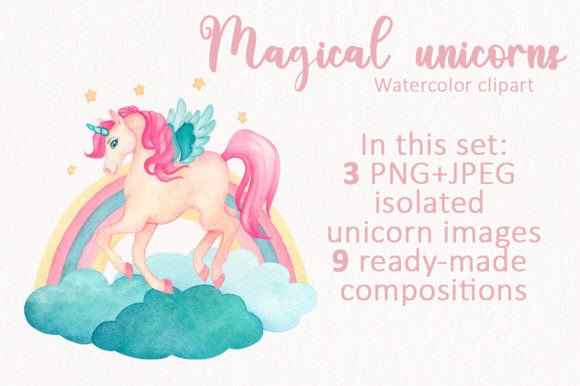
The visual language of Unicorns Watercolor Clipart is defined by soft edges, pastel palettes, and a sense of gentle movement. Watercolor naturally introduces subtle gradients and unpredictable color blooms—qualities that breathe life into static illustrations. A unicorn rendered in this medium might feature a mane that shifts from lavender to dusty rose, with tiny splatters and paper texture adding depth. These aren't flat, cartoonish icons. They carry a handmade authenticity that resonates with audiences tired of hyper-polished, generic stock imagery.
From a design perspective, the style sits comfortably between fantasy realism and decorative illustration. The unicorns often incorporate floral wreaths, stars, moons, and rainbows, making them suitable for a wide range of themes beyond just mythical creatures. The personality is whimsical but not juvenile, which matters when you are targeting adults buying for children or crafting personal stationery. Because watercolor artwork tends to have a lighter visual weight, it pairs well with both clean modern typography and more ornate serif or handwritten fonts. You can drop a unicorn illustration onto a cream background, add a simple sans serif headline, and instantly have a balanced composition.
Where This Art Style Shines in Real Projects
The practical applications for Unicorns Watercolor Clipart extend far beyond nursery decor. In branding, these assets work beautifully for boutique children's clothing lines, organic skincare products aimed at young families, and whimsical event planning businesses. A logo built around a watercolor unicorn feels approachable and creative, especially when paired with a handwritten or script typeface. The organic texture helps a brand avoid looking too corporate or sterile—a common challenge in markets where warmth and trust matter.
For content creators and bloggers, this clipart is a goldmine. Social media graphics featuring watercolor unicorns typically see higher engagement in niches like parenting, early childhood education, and creative lifestyle. The soft colors and fantasy elements catch the eye in crowded feeds without screaming for attention. In editorial design, these illustrations serve as chapter headers, pull-quote backgrounds, or full-page accents in children's magazines and activity books. They also work well in packaging design for artisanal gifts, party supplies, and subscription boxes aimed at young girls or fantasy enthusiasts.
Print projects benefit especially from the watercolor texture. Greeting cards, invitations, wall art prints, and scrapbooking layouts all leverage the natural paper-like feel. When printed on matte or textured stock, the illustrations feel even more authentic. For commercial projects, such as branding materials for a children's boutique or product labels, the clipart provides a consistent visual system without requiring a custom illustration budget. Just keep in mind that watercolor elements can lose their subtlety when scaled too large or printed on glossy paper, so test your proofs before going to production.
How Clipart Shapes Brand Perception and Audience Engagement
Design assets like Unicorns Watercolor Clipart do more than decorate a page. They communicate values. A brand that uses hand-painted style imagery signals creativity, care, and a human touch. In a marketplace saturated with templated designs, this visual approach helps small businesses differentiate. Parents shopping for a birthday party invitation, for example, often choose designs that feel personal and lovingly made. Watercolor unicorns deliver that impression instantly, without a single word of copy.
From a visual hierarchy standpoint, these illustrations work well as hero images or accent elements. Because watercolor art has soft boundaries, it doesn't compete aggressively with bold typography. You can place a unicorn illustration behind a headline and maintain readability, especially if you apply a subtle opacity shift or use a dark text color against the lighter areas of the painting. This flexibility makes the clipart useful for web design, particularly in hero sections, about pages, and product feature areas where you want to create emotional resonance without cluttering the layout.
Consistency is another factor. A cohesive set of watercolor unicorn elements—matching color palettes, similar brush textures, and complementary motifs—helps build visual recognition across a brand's touchpoints. When a customer sees the same illustration style on your website, social media, packaging, and email headers, they subconsciously register that your brand is polished and intentional. That recognition builds trust over time. And trust, especially in markets targeting parents and gift-givers, directly drives conversions.
Practical Tips for Choosing and Using Unicorns Watercolor Clipart
Not all watercolor clipart sets are created equal. When evaluating Unicorns Watercolor Clipart for a project, start by reviewing the resolution and file formats. Look for sets that include PNG files with transparent backgrounds—this saves hours of manual cutting and ensures clean integration into your layouts. Vector versions, such as SVG or AI files, are ideal if you need to scale the art for large banners or packaging without losing detail. Many premium design assets also include layered files, which let you adjust individual elements like the mane, horn, or background independently.
Consider the color palette of the set. Does it match your brand's existing scheme, or is it flexible enough to work with it? Some clipart packs offer multiple color variations of each unicorn, which is invaluable for maintaining consistency across different projects. If you are designing for a client who needs both light and dark mode versions of their website, having alternate colorways saves significant production time.
Font pairing is another consideration, even though we are talking about clipart. The right typeface can elevate unicorn illustrations from simple decoration to cohesive brand asset. A handwritten font with organic strokes complements the watercolor texture naturally. For headings, try a clean sans serif like Montserrat or Open Sans to balance the softness of the art. In logo design, a high-contrast serif can add elegance, especially if the unicorn is more detailed and painterly. Always test your pairings in mockups before finalizing.
Readability matters when you place text near or over these illustrations. Watercolor art often has lighter areas around the edges and darker concentrations in the center. Use those lighter zones for text placement. Avoid placing body copy directly over heavily painted sections, as the texture can break up letterforms. If you must overlay text on a darker area, add a semi-transparent white or black box behind the text to maintain legibility.
Finally, review the commercial licensing. If you are using Unicorns Watercolor Clipart in products for sale—like printables, branding packages, or merchandise—confirm that the license covers commercial use. Many designers and small business owners overlook this step and later face issues with copyright claims. Reputable clipart creators clearly state whether their assets are licensed for personal use only or for commercial projects with or without attribution. Read the terms carefully, especially if you plan to use the art in logo design, where exclusivity might matter.
For those just starting out, a good test is to download a sample file from the set and drop it into a mockup of your actual project. See how it interacts with your typography, color palette, and layout. Sometimes a unicorn that looks stunning on a white background feels muddy when placed next to a busy pattern or a bold headline. Testing early prevents disappointment later and helps you decide whether a particular set truly fits your creative vision.
Unicorns Watercolor Clipart is not just a trendy design asset—it is a practical tool for anyone who needs to communicate magic, warmth, and handmade quality quickly. When chosen thoughtfully and used strategically, it elevates branding, content, and products in ways that polished stock vectors often cannot. Whether you are designing for a client, your own business, or a personal project, let the texture and softness of watercolor do the heavy lifting. Your audience will feel the difference.